October 9, 2023 · 23 min read · Media Strategy
In the rapidly evolving media landscape, large Broadcast Video on Demand (BVOD) media groups find themselves at the intersection of traditional broadcast activities and the dynamic field of digital video on demand platforms. While both share the common goal of captivating audiences, they diverge in terms of customer engagement segments and revenue streams. BVOD media groups encompass not only the legacy of linear TV broadcast channels but also embrace the disruptive force of digital OTT platforms, generating revenue through advertising, subscriptions, and distribution agreements.
In this article, we delve into the intricacies of managing content supply chains within large BVOD media groups, exploring the key phases, challenges, and solutions involved, and by the end, readers will gain a comprehensive understanding of how these media groups navigate content creation, distribution, and monetization while addressing common challenges and implementing strategic solutions for success.
A. Understanding the Content Supply Chain
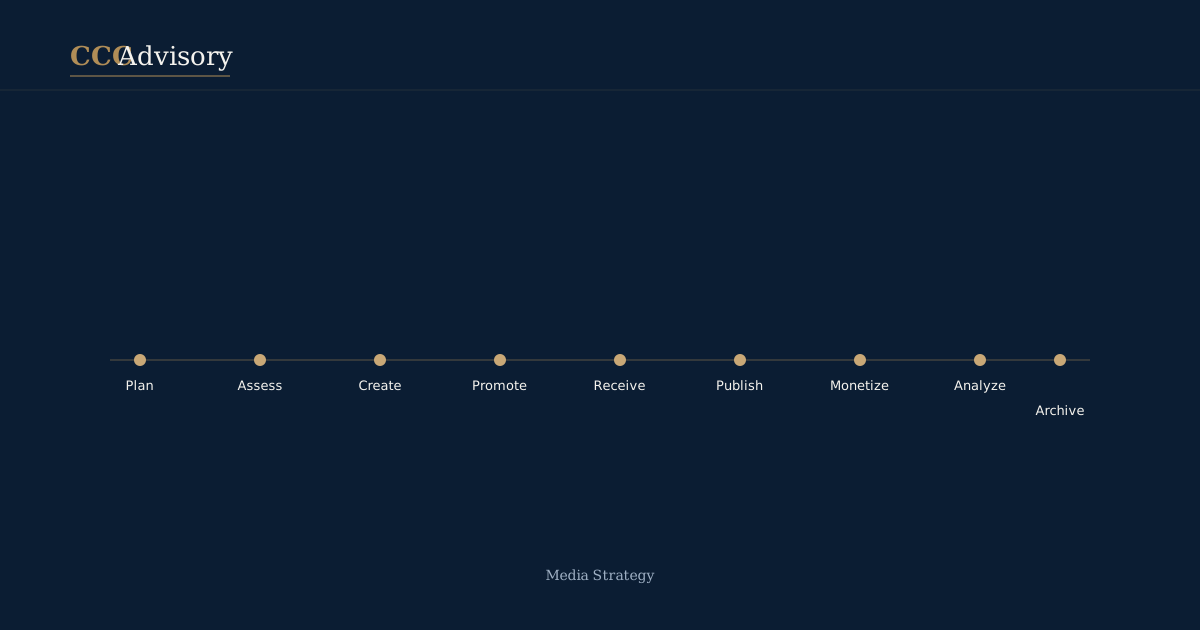
The content supply chain within BVOD media groups is a multifaceted journey that brings content from ideation to archive and beyond. It comprises several phases and stages, each playing a crucial role.

1. Plan
- Group Content Strategy: At the heart of efficient content supply chain management lies a comprehensive group content strategy. This strategy answers fundamental questions about the group's identity, objectives, and audience targeting, defining content offerings, content-making processes, distribution policies, compliance standards, and measurement approaches.
- Platform Needs: To translate the group's content strategy into actionable plans, it is essential to tailor it to each platform's specific needs and strategies, ensuring precise financial and operational goals for budgeting, scheduling, distribution, and profitability planning.
2. Assess
- Ideation and Conceptualization: Creative ideas are collected, reviewed, and assessed for alignment with the group's strategic vision, identifying emerging formats and technologies that enrich the content library.
- Content Development and Pre-Production: Writers, directors, producers, and stakeholders collaborate to flesh out the story, script, and treatment, with preliminary planning and budgeting crucial to a smooth progression.
- Budgeting and Financial Feasibility: Detailed budgeting ensures financial viability at group and platform levels, with data-driven predictions estimating engagement, revenue, and ROI, forming KPIs for future performance review.
- Approval: Stakeholder approvals ensure content aligns with strategic and financial objectives, with windowing and distribution plans set strategically at this stage.
3. Create or Acquire
- Content Commissioning: The Central Content Commissioning Unit identifies, contracts, and oversees content productions, whether produced in-house or acquired externally, ensuring alignment with the group's overarching content strategy.
- Contracting: Robust contracting processes guarantee legal and ethical compliance in production, acquisition, and distribution.
- Production: Production teams bring content to life through meticulous coordination of cast, crew, equipment, and locations. Centralizing the Production Management Function at group level is recommended to optimize quality, schedule, and budget.
- Post-Production: Editors, sound designers, visual effects artists, and colorists work together to enhance quality, coherence, and emotional impact.
4. Promote
Effective promotion and packaging strategies, managing, manipulating and packaging content, are employed to boost audience engagement and interest.
5. Receive Content and Ensure Compliance & Quality Assurance
- Content Approval: Stakeholders review content for compliance with brand values, regulations, and ethical standards.
- Contracting Compliance: Management of contracts with talent and production teams ensures legal compliance.
- Quality Assurance: Rigorous checks confirm technical and content quality align with commitments and standards.
6. Publish & Deliver
This stage involves scheduling content and implementing windowing and distribution strategies that maximize reach among the intended audience, creating a seamless viewing experience across devices.
7. Monetize
BVOD media groups exploit various revenue streams, including advertising, subscriptions, and distribution agreements, from both broadcast channels and digital VOD platforms to ensure financial sustainability.
8. Analyze
- Content Performance Monitoring: Rigorous analysis of financials and engagement metrics such as views, engagement rates, and viewer demographics gauges audience response, enabling data-driven decisions for future strategy.
- Content Optimization and Personalization: Machine learning fine-tunes content and tailors recommendations, enhancing viewer satisfaction, brand loyalty, and lifetime value.
9. Archive
As the content library expands, structured archival and inventory management systems ensure efficient retrieval and repurposing of content metadata, contributing to cost efficiency and preventing redundant efforts.
B. Challenges Faced by Large BVOD Media Groups and Their Resolutions
Large BVOD media groups encounter a range of common challenges in managing their content supply chains that require strategic solutions.
Sample of Common Challenges
- Content Strategical Planning: The absence of a cohesive group content strategy, or the failure to link it effectively to platform needs, can result in misalignment and inefficiency.
- Operating Model: Replication of functions across the group, without proper segregation of duties or a Central Content Commissioning Unit and proper operating model structure, can lead to operational redundancies.
- Content Data Governance & Metadata Standardization: Insufficient focus on data governance and lack of integration between content data systems can result in operational inconsistencies and reporting challenges.
I. Content Strategical Planning
Develop a comprehensive group-level content strategy that answers key questions about the group's identity, objectives, audience targeting, content offerings, content-making processes, distribution, compliance, and measurement, relying on historical data analytics and future desired targets. Then cascade the overarching content strategy into platform-specific strategies and needs, translating it into precise financial and operational goals by platform or channel.
Case Study · Netflix and "Stranger Things"
Netflix's content strategy emphasizes a diverse content offering, original productions, and binge-worthy series, and "Stranger Things" reflects all three: a science fiction horror series structured for binge-watching. On the platform-needs side, Netflix designed the show with captivating storytelling and cliffhangers to drive viewer engagement, while its recommendation algorithm personalizes discovery for a wide audience. The result was a massive hit that encouraged binge-watching and contributed to Netflix's reputation for original, engaging series, demonstrating how aligning content strategy with platform needs drives subscriber growth.
II. Operating Model and Operational Excellence
The Role of the Central Content Commissioning Unit (CCU)
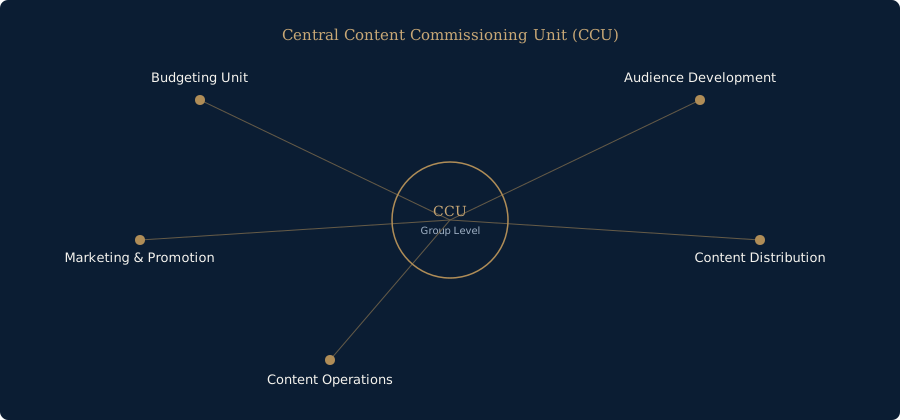
Establishing a Central Content Commissioning Unit as an independent body that efficiently serves all content stakeholders and platforms within the group is central to an efficient content supply chain. The CCU acts as the epicenter of creative strategy and direction, and its responsibilities include:
- Creative Vision and Alignment: aligning content with the brand's identity, values, and market trends across every stage of the content supply chain.
- Strategic Content Curation: curating a balanced content portfolio using data and analytics to drive content decisions.
- Optimizing Budgeting, Commissioning and Resource Allocation: strategically assigning budgets and talent to minimize waste and maximize investment impact.
- Market Trend Insight: monitoring trends using machine learning and AI tools to keep content relevant and competitive.
- Content Data Governance: improving data governance and systems integration for automated, streamlined content workflows.
- Cross-Functional Collaboration: liaising with creative teams, production, marketing, and distribution to ensure a harmonious flow across the entire supply chain.
Specialized Content-Related Units
Specialized units bring focused expertise to specific aspects of the content supply chain, and their effectiveness lies in collaborating to orchestrate a cohesive content ecosystem alongside the CCU.
- Budgeting Unit: develops and oversees budgets for content projects, ensuring financial feasibility and aligning investments with the group's financial goals. Netflix's efficient budgeting unit uses data-driven predictions to allocate budgets, informing hits like "Stranger Things."
- Audience Development Unit: focuses on understanding and growing the audience through data analytics and content performance review. Amazon Prime Video used this function to spot rising documentary viewership, leading to commissions like "The Social Dilemma."
- Marketing and Content Promotion Unit: ensures the audience is aware of and excited about available content. Disney's marketing for "The Mandalorian" built buzz that drove Disney+ subscriptions.
- Content Operations Unit: streamlines workflows and ensures standardization of content data parameters across the group, as BBC has done with automated, standardized workflows.
- Content Distribution Unit: manages the logistics of getting content to the right platforms and audiences, as YouTube does through recommendation algorithms based on viewing history.
Eliminating Replication of Functions
Where replication of functions exists across the group, it becomes paramount to pinpoint areas for consolidation, streamline processes, and capitalize on shared services, driving down operational costs and elevating efficiency through centralized, agile practices.
Centralization vs. Decentralization in a Federated Structure
Centralization consolidates decision-making and operational control at group level, fostering consistency, economies of scale, and strategic alignment, though excessive centralization can hinder local responsiveness and innovation. Decentralization empowers individual business units to make autonomous day-to-day decisions, leveraging local knowledge and agility, though excessive decentralization can create duplication and coordination challenges.
The right federated structure balances centralization within the CCU at group level with decentralization at the business level. General guidance:
- Centralize: content strategic planning, creative review, commissioning, production (pre, production, and post), production facilities management, audience development and data analytics, distribution, and rights management.
- Decentralize: platform needs, programming, scheduling, and planning, so individual business units can respond swiftly to local market demands.
- Federate: content operations, content marketing, compliance and quality assurance, and analytics/reporting, combining group-level procedures with business-level implementation.
Real-World Examples · Federated and Centralized Structures
Netflix runs a centralized commissioning team that maintains consistent brand identity and quality globally. The BBC operates a centralized commissioning model across its channels and platforms. Disney has eliminated function replication by centralizing distribution and marketing across its properties. WarnerMedia centralizes rights management and distribution agreements while letting units like HBO and Warner Bros. make platform-specific decisions. Comcast balances a central commissioning unit for NBCUniversal with autonomy for networks like NBC and Universal Pictures. ViacomCBS centralizes budgeting and compliance while giving brands like CBS, MTV, and Nickelodeon flexibility to serve their audiences. BBC iPlayer centralizes commissioning and rights management while decentralizing programming and scheduling to individual channels.
Segregation of Duties and Departmental Division
Segregating key content functions into specialized departments allows for focused expertise and streamlined operations:
- Platform Manager: oversees and strategizes the operations of specific platforms or channels, curating content, planning scheduling, and analyzing viewer data to optimize engagement.
- Creative Executive: shapes the artistic vision of content, aligning it with the group's identity, market trends, and audience preferences.
- Content Commissioner: identifies, evaluates, and acquires content, negotiating commercial terms and licensing agreements while ensuring alignment with programming strategy.
- Production Executive: oversees production and post-production of commissioned projects, whether produced internally or externally, managing budgets, schedules, and resources.
Real-World Examples · Specialized Roles
Netflix's Content Commissioners specialize by content category and lean heavily on data analytics to inform decisions. HBO's Creative Executives shape the direction of original series like its acclaimed drama slate. Amazon Prime Video's centralized Production Executive team keeps productions like "The Marvelous Mrs. Maisel" on budget and on schedule. Disney+'s Platform Managers curate content specifically for a family-friendly audience, optimizing engagement for that platform.
Overcoming Common Restructuring Challenges
- Resistance to Change: address by emphasizing benefits, providing training, and communicating goals clearly.
- Coordination and Communication: establish robust communication protocols, regular meetings, and cross-functional teams.
- Balancing Centralization and Autonomy: define clearly which functions benefit from centralization, with regular feedback loops to stay aligned.
- Maintaining Quality and Consistency: maintain quality control mechanisms and standardized guidelines, with regular audits.
- Managing Cultural Differences: employ cultural sensitivity and market research expertise to adapt content strategies regionally.
- Content Rights Management: establish dedicated rights management teams and invest in rights management software.
- Competition and Differentiation: invest in diversification, original productions, and unique user experiences informed by market research.
- Viewer Engagement and Retention: use data analytics and machine learning to personalize recommendations and invest in exclusive content.
III. Content Data Governance & Metadata Standardization
Metadata enriches content with information spanning title basics (description, genre, release date, duration, language, format), rights and licensing (copyright holder, license type, expiry, territories), crew and cast, technical details, production details, distribution details, marketing assets, audience analytics, financials, and content ratings.
A robust data governance framework is essential for maintaining the accuracy, consistency, and security of content metadata. Unified, integrated technology, modern content management systems, AI-driven analytics, and automated workflows, streamlines content supply chain processes, minimizes bottlenecks, and enhances efficiency across the entire content lifecycle from ideation to archiving.
Overcoming Content Data Governance Challenges
- Manual Processes: automation is the answer; Netflix uses machine learning to automate recommendation and personalization.
- Lack of Cataloging and Standardization: standardize data parameters and implement a unified catalog, as BBC did across its platforms.
- Lack of Policy Documentation: document data governance policies, as HBO did to ensure compliance with content rights and licensing.
- Fragmented Systems: invest in systems integration, as Disney did when consolidating content libraries after its 21st Century Fox acquisition.
- Lack of Technology Integration: reduce the number of content-related systems to a strict minimum, then integrate ERP financial systems with media management systems, as BBC iPlayer and ViacomCBS have done.
- Scalability: invest in robust cloud infrastructure and automation, as Amazon Prime Video and Netflix's global expansion demonstrate.
- Data Inconsistency: establish one source of truth for each data parameter across the content ecosystem.
- Security and Privacy Concerns: implement encryption, regular security audits, and compliance with regulations like GDPR, as Amazon Prime Video's data security practices illustrate.
Conclusion
In the fast-paced media world, the orchestration of an efficient content supply chain is both an art and a science. It requires a well-defined content strategy, a streamlined content supply chain journey, and an efficient operating model. The establishment of a Central Content Commissioning Unit and clear departmental segregation are instrumental in ensuring smooth operations and empowering platforms to thrive in the ever-evolving digital landscape.
A federated structure that balances centralized optimization and decentralized adaptability, along with specialized units, plays a pivotal role in the CCU's success. As BVOD media groups navigate the challenges of strategic planning, operational excellence, and efficient data governance, they remain committed to delivering captivating content while optimizing revenues and reducing costs, making content supply chain management a dynamic blend of art and science.
Leave a Comment